Historic Suppressor Ruling Puts Wisconsin Law at a Crossroads
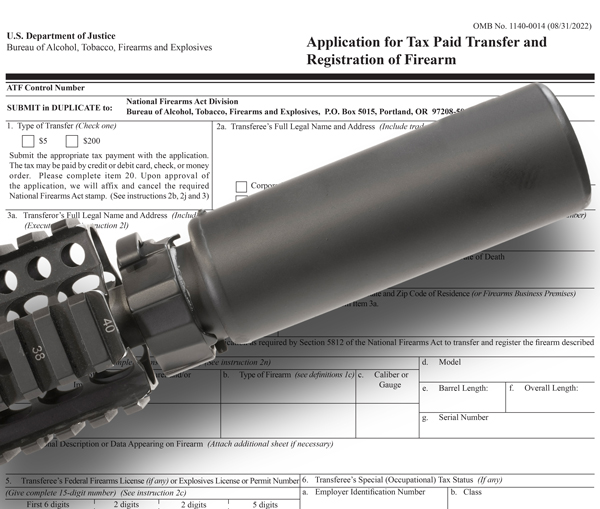
WGO calls on lawmakers to remove the state’s federal-registration requirement and prepare for a potential legal battle.
Madison, Wis.—A landmark federal court ruling that struck down National Firearms Act registration requirements for suppressors has opened a new front in the fight over gun rights—this time in Wisconsin.
On Aug. 5, U.S. District Judge James Wesley Hendrix of the Northern District of Texas ruled that federal registration and approval requirements for suppressors, short-barreled rifles and short-barreled shotguns exceeded Congress’s constitutional authority after Congress reduced the NFA tax on those items to zero.
The ruling took effect Thursday after the Justice Department declined to appeal within the seven days established by the court. Hours later, Gun Owners of America (GOA) and Silencer Shop announced what they described as the first lawful suppressor transfer without NFA registration since the National Firearms Act took effect in 1934.
For gun owners in Wisconsin, however, the federal victory does not automatically eliminate state restrictions.
Instead, it has created a potentially significant conflict between federal law and Wisconsin’s own suppressor statute.
“We’ve reached a remarkable moment in the history of the Second Amendment,” said Corey Graff, executive director of Wisconsin Gun Owners. “WGO commends the great work of our friends at Gun Owners of America, and now it’s time for members of Wisconsin Gun Owners (WGO) to finish the job here at the state level.”
A 92-Year-Old Law Enters New Territory
The National Firearms Act was enacted in 1934 and imposed a $200 tax and registration requirements on certain firearms and accessories, including suppressors.
The tax was significant at the time. The $200 transfer tax was roughly equivalent to a large amount of money for an ordinary American in 1934 and was intended to discourage transfers of NFA-regulated items.
For decades, however, the NFA survived constitutional challenges in part because courts viewed its requirements through Congress’s taxing power.
That changed when Congress reduced the federal NFA tax on suppressors, short-barreled rifles, and short-barreled shotguns to zero beginning Jan. 1, 2026.
Gun Owners of America and other plaintiffs subsequently challenged the remaining registration requirements in federal court. The litigation, Jensen v. ATF, was consolidated with Silencer Shop Foundation v. ATF. GOA and the Gun Owners Foundation are among the plaintiffs.
The plaintiffs argued that once Congress eliminated the tax, the constitutional justification for maintaining the NFA’s registration system disappeared.
Judge Hendrix ultimately agreed with that argument.
The ruling did not rest on a finding that the Second Amendment protects suppressors. Instead, the court addressed Congress’s constitutional authority to maintain the registration requirements after the tax was eliminated.
That distinction could become important in future litigation.
The plaintiffs had also argued that suppressors and short-barreled rifles fall within the Second Amendment’s protection and that there is no historical tradition of requiring registration of such arms. That issue was presented to the court but was not necessary to the ruling.
The First Transfer in 92 Years
The federal government’s decision not to appeal allowed the ruling to take effect Aug. 13. GOA had announced that it intended to make a suppressor transfer without NFA registration once the government’s appeal period expired.
Silencer Shop subsequently completed the transaction, with GOA describing it as the first lawful, unregistered suppressor transfer since June 26, 1934, when the NFA became law.
Gun rights advocates have hailed the development as one of the most significant firearms victories in generations.
It does not mean every American can necessarily walk into a gun store and purchase a suppressor without following additional procedures. The court’s order applies to the parties and qualifying people covered by the litigation, and questions remain about how federal agencies will implement the ruling more broadly.
Several members of Congress are already pressing the Justice Department to apply the decision nationwide through official rulemaking.
For Wisconsin, there is another problem.
Wisconsin Still Has Its Own Suppressor Law
Wisconsin Statute §941.298 states that a person who sells, delivers or possesses a firearm silencer generally commits a Class H felony.
That statute, however, contains exceptions—including one for a person who has complied with federal licensing and registration requirements under the NFA.
That language was written when federal suppressor registration was unquestionably part of the federal regulatory system.
The Jensen ruling changes that assumption.
And that raises a question that Wisconsin lawmakers have never had to confront: What happens when state law makes an exception dependent upon compliance with a federal registration requirement that a federal court says the federal government can no longer enforce?
That question is at the center of WGO’s new effort.
The organization says Wisconsin should amend §941.298 to remove the obsolete federal-registration requirement and make clear that a Wisconsin resident who may lawfully possess a suppressor under federal law is not committing a state felony simply because the suppressor has not been federally registered.
“We shouldn’t be asking a Wisconsin gun owner to risk a felony prosecution just to find out what an outdated statute means in a completely new federal legal environment,” Graff said.
A Potential Legal Conflict
The Wisconsin statute creates an unusual legal situation. Wisconsin does not operate its own independent suppressor-registration system. Instead, the state statute incorporates federal licensing and registration requirements into an exception to the state prohibition.
That means the federal court ruling could have consequences beyond federal law.
One possible interpretation is that Wisconsin’s statute continues to require actual federal registration regardless of whether federal authorities can enforce that requirement.
Another interpretation is that Wisconsin’s statute incorporates whatever federal registration requirements are legally applicable. If the federal government can no longer require registration under the circumstances covered by Jensen, there may be no federal registration requirement with which a person can comply.
That second interpretation could give Wisconsin gun rights advocates a significant legal argument.
But it has not been definitively resolved by Wisconsin courts.
And that distinction is important.
Badger State gun owners should not assume that the federal ruling automatically makes possession of an unregistered suppressor lawful under Wisconsin law.
Wisconsin’s statute remains on the books, and unauthorized suppressor possession remains potentially punishable as a Class H felony.
That is precisely why WGO says the Legislature should act rather than leave gun owners caught between conflicting legal regimes.
WGO Launches Petition Effort
Wisconsin Gun Owners (WGO) is asking members and supporters to sign a petition urging the state legislature to amend §941.298.
The petition calls for removal of the federal-registration requirement and protection for law-abiding Wisconsin residents who may legally possess suppressors under federal law.
The organization argues that Wisconsin should not make citizens comply with a federal registration system that has been found constitutionally unenforceable in the circumstances addressed by the federal court.
The proposed change would not create a Wisconsin registration system.
Instead, WGO says, it would bring Wisconsin law into line with the new federal legal landscape.
“There’s a very simple question here,” Graff said. “If the federal government no longer has the authority to require registration, why should Wisconsin make that registration a condition of exercising a right that federal law otherwise recognizes?”
The Fight Could Extend Beyond Suppressors
The implications may not end with suppressors. The federal litigation also involved short-barreled rifles and short-barreled shotguns. Wisconsin has separate statutes governing those firearms, including provisions that reference federal law.
That means future developments in the federal NFA litigation could force Wisconsin lawmakers to reconsider other portions of the state’s firearms code.
The situation is particularly fluid because the federal ruling was based on Congress’s taxing power rather than resolving every constitutional issue surrounding NFA regulation. Congress itself could also act.
And the Justice Department could undertake rulemaking to establish how ATF will implement the ruling nationwide. A bipartisan group of Republican lawmakers led by Rep. Andrew Clyde has already urged the administration to decline an appeal and apply the ruling nationwide through rulemaking.
The federal court’s decision therefore may represent the beginning of a larger legal and legislative process rather than its conclusion.
A New Legal Battle in Wisconsin
For WGO, the next step may involve more than lobbying. The organization is preparing to raise funds for legal research and potential litigation over the Wisconsin statute.
Among the questions lawyers could be asked to examine is whether Wisconsin can continue enforcing §941.298 against someone who is protected by the federal ruling and therefore cannot lawfully be required by the federal government to register the suppressor.
Another question is whether Wisconsin’s statute can constitutionally impose a state criminal penalty based on noncompliance with a federal requirement that is no longer enforceable.
Those questions could ultimately require a court to resolve.
WGO says it wants to be prepared.
“We’re not asking Wisconsin gun owners to become test cases for a felony charge,” Graff said. “We’re asking them to help us change the law and, if necessary, defend their rights in court.”
The organization is establishing a fundraising effort to support attorneys, legal research, potential litigation and legislative work surrounding the issue.
The Next Step Belongs to Wisconsin
The federal government has spent decades maintaining the NFA’s registration system.
Now, for the first time since 1934, qualifying gun owners have completed a suppressor transfer without that federal registration.
That victory came through a combination of congressional action, litigation and grassroots activism.
WGO activists now face a different challenge.
The question is no longer simply whether Washington will eliminate the federal suppressor-registration requirement.
The question is whether Wisconsin will continue enforcing a state law built around it.
WGO believes the answer should be no.
The organization is asking gun owners throughout Wisconsin to sign its petition, contact their state legislators, and contribute to the legal-defense effort.
“GOA and our allies have done the hard work of opening the door,” Graff said. “Now Wisconsin gun owners have an opportunity to walk through it.”
For WGO, that means taking the fight from the federal courthouse to Madison.
And for Badger State gun owners, the outcome could determine whether the historic federal victory over NFA registration actually reaches them—or whether an outdated state statute keeps the old system alive in Wisconsin.
ACTION:
CLICK HERE to sign the ONLINE PETITION to fix Wisconsin’s suppressor law!
Category: News & Alerts